A Lifetime of Improvisation
The whispers of the creative force of the Universe are always guiding us.
The question is: are we listening?
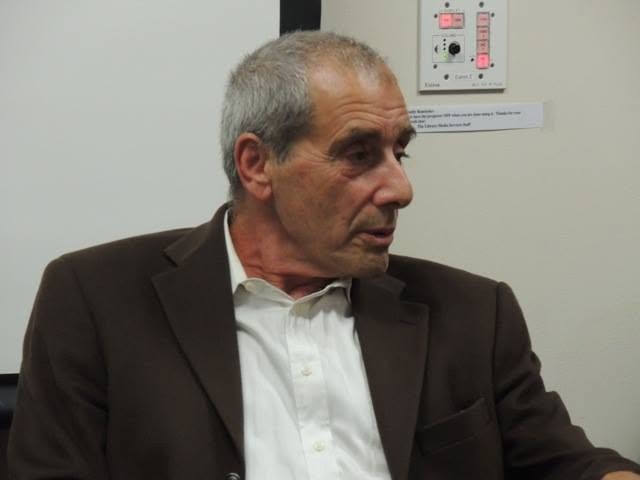
Meet the Author
An Aikido instructor, mediator, author, musician, and lifelong student of the human condition, based in the San Francisco Bay Area. A sixth dan of Aikikai Honbu Dojo, the life’s work has unfolded across three seemingly distinct yet deeply connected fields: martial arts and somatic practice, conflict resolution and diplomacy, and executive leadership and coaching.
For more than five decades, this work has explored a simple but profound question: How do we meet conflict without becoming consumed by it, and how might tension become a doorway to greater understanding?
In partnership with Chris Thorsen at a company called Quantum Edge, he delivered contracted seminars for seventeen years through the Center for Professional Excellence at the University of Texas San Antonio, including its EMBA program founded by Dr. Bob Lengel. He is also a senior associate of the Nautilus Institute for Security and Sustainability.
The martial arts journey began in 1969 and encountered Aikido in 1971 under Robert Nadeau, a direct student of Morihei Ueshiba. Their relationship continued for more than fifty years. His learning has never been confined to a single discipline. He has studied Brazilian capoeira with Bira Almeida (Mestre Acordeon), Cheng Hsin and boxing with world champion Peter Ralston, and qigong with B.K. Frantzis. He attended a seminar with physicist David Bohm exploring the practice of Dialogue and studied nonviolent communication with Marshall Rosenberg. He is also a graduate of the California Agricultural Leadership Program.
He founded Aikido of Marin and co-founded City Aikido of San Francisco, where he served as senior instructor. His teaching has been described as "a very freestyle, jazz-oriented style," an expression of a practice shaped not only by martial arts, but also by music, improvisation, communication, and decades of attentive observation.
Aikido as Improvisation
Aikido is improvisation. Not the loose, anything-goes kind, but the disciplined responsiveness that comes from years of training, deep listening, and embodied awareness. The kind where you are so present that you can feel what is coming before it arrives, and so centered that you can meet it without resistance.
O Sensei called Aikido "the realization of love." He described it as transcending the paradigm of martial arts the way quantum mechanics transcended classical physics, the way jazz transcended composition.
On the mat, you learn this:
When someone attacks, you have a choice. You can resist, meet force with force, create collision, make enemies. Or you can do something else entirely.
You can enter. Blend. Harmonize with the energy of the attack itself.
Not by being weak. Not by giving up. By being so present, so centered, so connected to your own core that you can feel the attacker's intention before it becomes action. You move with them, not against them. You redirect the energy. Transform it.
Conflict isn't something to win or lose.
It's energy waiting to be transformed.
That's Aiki. That's harmony. That's the sword that cuts things together instead of apart.
The Deeper Lessons of Aikido
This engagement with Aikido can be understood as more than a lifelong study of a martial discipline. It represents an ongoing philosophical inquiry into the nature of conflict, consciousness, relationship, and human freedom. Beneath the physical practice lies a fundamental question:
How can we encounter the forces of life without becoming dominated by them?
Aikido begins with an apparent contradiction. Two people meet through conflict: one advances, another responds; one exerts force, the other resists. At the physical level, there is tension, imbalance, fear, and the instinct for self-preservation. Yet Aikido gradually reveals that conflict need not culminate in opposition. The encounter itself can become a means of discovering another way of relating.
The question therefore shifts from "How can I defeat you?" to something more fundamental: "How can I remain centred and whole while meeting you?"
This transformation, from opposition to relationship, lies at the heart of Aikido and is central to this philosophical exploration of the art.
From Resistance to Relationship
Human experience is frequently organised through opposites: self and other, right and wrong, success and failure, victory and defeat. We instinctively interpret difference as separation and resistance as something that must be overcome.
Aikido questions this habitual way of seeing.
An attack can be understood not merely as something to stop, but as information about an emerging relationship. Force becomes communication. Movement becomes dialogue. The encounter becomes a form of mutual influence.
This does not imply that resistance is always wrong. Rather, Aikido reveals that unconscious resistance can intensify the very conflict it seeks to resolve. When force meets force, both sides become increasingly committed to opposition. But when the practitioner remains relaxed, centred, and perceptive, the relationship can change.
The force is neither simply opposed nor passively accepted. It is understood, joined, and transformed.
This is a different conception of strength: not the strength to impose one's will upon another, but the strength to remain present without being captured by the impulse to dominate.
The Centre Is Not a Place
One of Aikido's most profound teachings is the principle of centering. Yet the centre should not be understood merely as a physical location within the body. It is better understood as a quality of presence.
To be centred is to retain awareness when circumstances attempt to disturb our equilibrium. Fear contracts consciousness. Anger narrows perception. Ego demands victory. Anxiety projects the mind into futures that have not yet occurred.
Centering brings attention back to the immediacy of experience.
From this condition, action becomes less reactive and more responsive. We are no longer compelled to act simply because an emotion has arisen. There is a space between stimulus and response, and within that space lies freedom.
In this sense, the centre is not something that we permanently possess. It is something we continually return to.
The practice of Aikido therefore becomes a practice of returning: to the body, to breath, to awareness, and ultimately to the present moment.
The Question of the Other
Perhaps the deepest philosophical implication of Aikido concerns the apparent separation between self and other.
The attacker and defender initially appear to be two independent individuals. Yet the movement of one immediately affects the movement of the other. Neither exists within the encounter independently. Each is participating in a relationship that continuously changes both.
There is no movement without relationship.
This is closely related to the Aikido principle of musubi: connection, joining, and the creation of relationship. Musubi suggests that the purpose of an encounter need not be the destruction or defeat of one side by the other. The encounter itself can become creative.
The space between two people is therefore not merely empty space. It is a living field of relationship.
Within that field, something new can emerge that neither individual could produce alone.
From this perspective, Aikido offers a profound challenge to the idea of absolute separation. It does not ask us to eliminate the other, but to examine the assumption that the other is entirely separate from ourselves.
Conflict as a Teacher
This exploration of Aikido extends naturally beyond the dojo because conflict is not confined to martial encounters. It appears in personal relationships, families, organisations, cultures, societies, and within the individual psyche itself.
Aikido does not necessarily regard conflict as the fundamental problem. The deeper problem may be our unconscious relationship to conflict.
When challenged, we often react before we understand. We defend an identity, protect an opinion, or attempt to control an outcome. In doing so, we may become trapped by the very forces we are attempting to overcome.
Aikido offers another possibility: to remain present within uncertainty long enough for perception to deepen.
The person who challenges us can therefore become an unexpected teacher. The difficulty becomes an opportunity to encounter aspects of ourselves that ordinary circumstances may never reveal.
Conflict becomes a mirror.
What we discover in that mirror is not always comfortable, but it can be transformative.
Beyond Technique
As Aikido matures within the practitioner, the fundamental questions begin to change.
At first, we ask: How do I perform the technique correctly?
With experience, the question becomes: How do I move with another person?
With deeper practice: What happens within me when I encounter resistance?
And eventually, perhaps: Who am I when I no longer need resistance to define myself?
At this point, martial practice begins to become philosophical practice.
The technique becomes a mirror through which the practitioner observes the self. The partner becomes a teacher. The dojo becomes a laboratory in which consciousness is explored through the body. Movement becomes a form of inquiry.
Aikido is no longer merely something one performs. It becomes something through which one begins to understand oneself.
The Intelligence of Movement
This exploration also raises a broader philosophical question: what is the relationship between conscious thought and the intelligence expressed through the body?
We do not consciously direct every heartbeat, regulate every breath, or calculate every adjustment required to maintain balance. Much of human movement occurs beneath deliberate thought.
Aikido cultivates sensitivity to this dimension of experience.
To perceive before judging. To listen before reacting. To move without unnecessary tension. To respond without allowing thought to become an obstacle to perception.
This does not mean abandoning reason. Rather, it suggests that human intelligence may be broader than conceptual thought alone.
The body knows things before the conscious mind has formulated them into words.
Aikido invites us to listen to that knowledge.
Practice therefore becomes less an attempt to control life and more an education in participation: to become sensitive enough to respond to what is actually occurring rather than continually imposing what we think should occur.
Aikido as a Way of Being
Ultimately, the deepest lesson of Aikido is not contained in any individual technique.
It is a way of being.
To develop strength without hardness. To cultivate relaxation without weakness. To remain open without losing one's centre. To remain centred without becoming rigid. To encounter aggression without becoming aggressive. To acknowledge difference without immediately creating separation. And to seek harmony not by eliminating conflict, but by transforming our relationship to it.
This is the paradox of Aikido: The more we attempt to control another, the more we become bound to the struggle. The more deeply we learn to listen, the greater the field of possibility becomes.
From this perspective, this journey through Aikido can be understood as a movement from technique toward awareness, from resistance toward relationship, and from separation toward interconnectedness.
The ultimate opponent is therefore no longer the person standing before us. It is the unconsciousness within ourselves that turns difference into opposition and uncertainty into fear.
The deeper victory of Aikido is not the defeat of another human being. It is the gradual dissolution of the need for an enemy.
And perhaps, at its deepest level, Aikido points toward a realisation that challenges the very foundation of conflict: The person standing before me is not merely an opponent. Through our encounter, we reveal something to one another, and in that encounter, the boundary between "self" and "other" becomes less certain.
The practice then becomes more than martial art. It becomes an inquiry into what it means to be human.
The Quantum Lens
O Sensei said there is evil in this world because people forget that we all come from the same source.
That source is the Unified Field.
People call it "common sense." That common sense is the Unified Field.
The principles O Sensei taught—the principles I've explored with executives, used in difficult conversations and negotiations, and experienced on the mat—keep pointing back to this one reality.
Not as scientific proof.
As a lens.
Ideas such as uncertainty, possibility, observation, relationship, and the interconnected nature of things became a way of understanding what we experience in Aikido—and in life.
Consider the observer.
In quantum mechanics, the act of observing is not always separate from what is being observed. Measurement becomes part of the interaction.
There is a powerful parallel in our own lives.
How we look at something affects what becomes possible.
When we are frightened, we see threats.
When we are defensive, we see opposition.
When we are angry, we see an enemy.
But when we remember the Unified Field—when we are centred and present—the same situation can look completely different.
An attack can become an opportunity to connect.
Resistance can become information.
Conflict can become movement.
The situation may not have changed.
But we have.
And that changes what we are able to see—and therefore how we are able to respond.
The quality of your attention changes the possibilities available to you.
The laboratory is not somewhere out there.
It is the mat.
It is the meeting room.
It is the difficult conversation.
It is everyday life.
And the experiment is always the same:
What becomes possible when I remember the Unified Field and change the way I meet what is happening?
Improvising Peace
Over decades, the principles of Aikido have been brought into some of the world's most intractable conflicts. The work is Track II diplomacy, citizen-to-citizen dialogue outside official channels, where divided communities are brought into the same room and guided toward connection. It is improvisation in its highest form: listening beneath positions, finding where contact is possible, creating space for dialogue where none seemed to exist.
In partnership with the Institute for Multi-Track Diplomacy, the Harvard Negotiation Project, and the Fulbright Foundation, this work has unfolded across multiple conflict regions:
Musical Improv
He has performed as a vocalist and multi-instrumentalist in the Bay Area for several decades. British business consultant and improvisational musician David Pearl, who describes him as someone who "plays a mean trumpet, sings the blues," has called him "a true master."
In 2011 he compiled and produced Liko Martin Right Now, a commercially released album by Liko Martin, a leading figure of the Hawaiian Renaissance, songwriter for Don Ho, and recipient of the 2018 Hawaiian Kingdom Patriot Award.
Practice in the World
The book is one doorway. What I share comes through many forms.
“I still train people in Aikido, physical practice on the mat. I coach executives who need to transform their relationship with pressure. I work with organizations navigating change. I facilitate difficult conversations where people have forgotten how to listen.”
All of it comes back to the same principles:
WIGO: What Is Really Going On beneath surface appearances
The Quantum Pause: space between stimulus and response
Observer Effect: your state determines your reality
Center and Circle: strong force and subtle force in balance
The Floating Bridge: where opposites complete each other
These aren't theories. They're practices. Ways of being. Choices you make moment by moment about where to place your attention, how to meet energy, whether to resist or harmonize.